Lord’s Day 40 · Part III: Gratitude
The Sixth Commandment
Taught by a pastor from the Reformed churches. The whole series on YouTube
Free video courseTake this Lord’s Day as a step in the course, with checkpoints along the way and a certificate at the end.Go to the courseAnswers are hidden. Say each one, then tap it to check.
What is God’s will for you in the sixth commandment?
I am not to belittle, hate, insult, or kill my neighbor— not by my thoughts, my words, my look or gesture, and certainly not by actual deeds— and I am not to be party to this in others;1 rather, I am to put away all desire for revenge.2 I am not to harm or recklessly endanger myself either.3 Prevention of murder is also why government is armed with the sword.4
What doth God require in the sixth command?
That neither in thoughts, nor words, nor gestures, much less in deeds, I dishonour, hate, wound or kill my neighbour, by myself or by another; but that I lay aside all desire of revenge; also, that I hurt not myself, nor wilfully expose myself to any danger: wherefore also the magistrate is armed with the sword, to prevent murder.
What does God require in the sixth commandment?
That I neither in thought, nor in word or look, much less in deed, revile, hate, insult, or kill my neighbor, whether by myself or by another; but lay aside all desire of revenge: moreover, that I harm not myself, nor willfully run into any danger. Wherefore, also, to restrain murder, the magistrate is armed with the sword.
Was will Gott im sechsten Gebot?
Daß ich meinen Nächsten weder mit Gedanken, noch mit Worten oder Geberden, viel weniger mit der That, durch mich selbst oder Andere, schmähen, hassen, beleidigen oder tödten; sondern alle Rachgierigkeit ablegen, auch mich selbst nicht beschädigen, oder muthwillig in Gefahr begeben soll. Darum auch die Obrigkeit, dem Todtschlag zu wehren, das Schwert trägt.
- 1Gen. 9:6; Lev. 19:17-18; Matt. 5:21-22; 26:52
- 2Prov. 25:21-22; Matt. 18:35; Rom. 12:19; Eph. 4:26
- 3Matt. 4:7; 26:52; Rom. 13:11-14
- 4Gen. 9:6; Ex. 21:14; Rom. 13:4
Does this commandment refer only to murder?
But this command seems only to speak of murder?
In forbidding murder, God teaches us that he abhors the causes thereof: such as envy, hatred, anger, and desire of revenge; and that he accounts all these as murder.
But this commandment speaks only of killing.
In forbidding this, however, God means to teach us that he abhors the root of murder—namely, envy, hatred, anger, and desire of revenge; and that all these are in his sight hidden murder.
Redet doch dieß Gebot allein vom Tödten.
Es will uns aber Gott durch Verbietung des Todtschlags lehren, daß Er die Wurzel des Todtschlags, als Neid, Haß, Zorn, Rachgierigkeit, hasset, und daß solches alles vor ihm ein heimlicher Todtschlag sei.
- 1Prov. 14:30; Rom. 1:29; 12:19; Gal. 5:19-21; 1 John 2:9-11
- 21 John 3:15
Is it enough then that we do not murder our neighbor in any such way?
But is it enough that we do not kill any man in the manner mentioned above?
No: for when God forbids envy, hatred and anger, he commands us to love our neighbour as ourselves; to show patience, peace, meekness, mercy, and all kindness, towards him; and prevent his hurt as much as in us lies: and that we do good even to our enemies.
Is it, then, enough that we do not kill our neighbor in any such way?
No; for in condemning envy, hatred, and anger, God requires us to love our neighbor as ourselves, to show patience, peace, meekness, mercy, and kindness towards him, and, so far as we have power, to prevent his hurt; also, to do good even unto our enemies.
Ist's aber damit genug, daß wir unsern Nächsten, wie gemeldet, nicht tödten?
Nein: denn indem Gott Neid, Haß und Zorn verdammt, will Er von uns haben, daß wir unsern Nächsten lieben, als uns selbst, gegen ihn Geduld, Friede, Sanftmuth, Barmherzigkeit und Freundlichkeit erzeigen, seinen Schaden, so viel uns möglich, abwenden, und auch unsern Feinden Gutes thun.
- 1Matt. 7:12; 22:39; Rom. 12:10
- 2Matt. 5:3-12; Luke 6:36; Rom. 12:10,18; Gal. 6:1-2; Eph. 4:2; Col. 3:12; 1 Pet. 3:8
- 3Ex. 23:4-5; Matt. 5:44-45; Rom. 12:20-21; Prov. 25:21-22
TranscriptRead the film: Lord’s Day 40Tap a time to play the film from there · transcribed from the film
What is God’s will for you in the Sixth Commandment? I am not to belittle, hate, insult, or kill my neighbor, not by my thoughts, my words, my look, or gesture, and certainly not by actual deeds. I am not to be party to this and others. Rather, I am to put away all desire for revenge. I am not to harm or recklessly endanger myself either. Prevention of murder is also why government is armed with the sword. Does this commandment refer only to murder?
By forbidding murder, God teaches us that He hates the root of murder. Envy, hatred, anger, vengefulness, in God’s sight all such are disguised forms of murder.
Is it enough then that we do not murder our neighbor in any such way? No. By condemning envy, hatred, and anger, God wants us to love our neighbors as ourselves. Be patient, peace-loving, gentle, merciful, and friendly toward them to protect them from harm as much as we can and to do good even to our enemies. Because man is made in the image of God, those who take man’s life forfeit their own. If man were an animal or a bug, it wouldn’t matter that man is murdered. But because he’s made in the image of God, his life has dignity and value. And God says to assault man’s life is to assault God himself.
Now we might think that that’s all that God condemns, but Jesus is more exacting in his Sermon on the Mount in Matthew chapter 5. He tells us that he has come to do away with Pharisaical religion. The Pharisees were the masters of looking good on the outside and having a kind of godly appearance, but having hatred in their heart, not only against God, but against their fellow man. It was not an atypical attitude that Jews had to say, okay, sure, I won’t murder, that’s obvious, I won’t plunge a knife into the chest of my neighbor, I get it, but I think God gives us permission to hate other people.
It’s okay to belittle or to insult others. And God says that he doesn’t just look at the actions and the outward behavior of people, he looks at our heart, he looks at the attitudes that are in us that lead to murder. In our day, we’re oftentimes given permission by the world around us and by society to hate others. And God says we must be very careful to let hatred into our hearts. Those who hate, those who envy, those who are jealous, those who live in strife are not manifesting the fruit of the Spirit, but rather the works of the flesh. And those who do so are not heirs of the kingdom of heaven.
God tells us very clearly in his word in 1 John 3.15, Everyone who hates his brother is a murderer, and you know that no murderer has eternal life abiding in him. Before God, if you hate your brother, you are as guilty as a serial killer. A person who is consumed by hatred and by a twisted desire against their neighbor does not know God and has completely lost touch with the gospel of Jesus Christ. By the end of this Lord’s Day, we have not just only considered what God condemns, but what’s the antidote? And we’re given that in Heidelberg 107. God doesn’t just condemn the actions of murder and the attitudes that lead to it.
He also commands you to biblical love, the biblical love of your neighbor and its lawful expressions. God calls us to be patient, peace-loving, gentle, merciful, friendly, and to protect our neighbor and even to love our enemies. In God, we find the example of how this is all to be done. God routinely calls us in the New Testament to follow Him, to be imitators of God as beloved children, and to walk in love, to forgive one another even as He in Christ has forgiven us. In the Old Testament, God also constantly calls His people to do good to His enemies. This is not, by any stretch, only a New Testament idea.
Some people think that in the Old Testament, God allowed His people to hate, but in the New Testament, we are now called to love our enemies, and nothing could be further from the truth. We find this in Exodus 23 and Proverbs 25. And then, of course, in the New Testament, God amplifies these commands, because is it not the case that salvation is God loving His enemies? While we were still enemies, while we were far from God, while we hated God, while we were rebellious against Christ, Christ came and laid down His life for us, who were His enemies, to make us now His friends and His people.
So, if you love only those who love you, the Bible says, Congratulations! You have adopted the tribalistic ethic of the world. In Bible times and in the time of Christ, it was very common for the Jew to love only the Jew, to hate Gentiles, for the Roman citizen to love only other Roman citizens and to hate non-citizens. But in Christ, we’re given a better ethic, a universal ethic that encompasses not only those who would do well to us, but encompasses even those who would malign us, those who would be considered our enemy. And so, what does this look like? We are called to be well-disposed to others in love and to be those who are beneficent, not just benevolent, those who do good to others, those who are patient, who bear up offenses, who seek to reconcile warring brothers.
We are called to be gentle and not harsh or brash, merciful, that is, ready to forgive others when they offend us and ready to help them when they are in need. And in doing so, we’re simply following the example with the power of our Savior himself, who loved us while we were enemies and gave his life up for us, that we would know God and be reconciled to God.
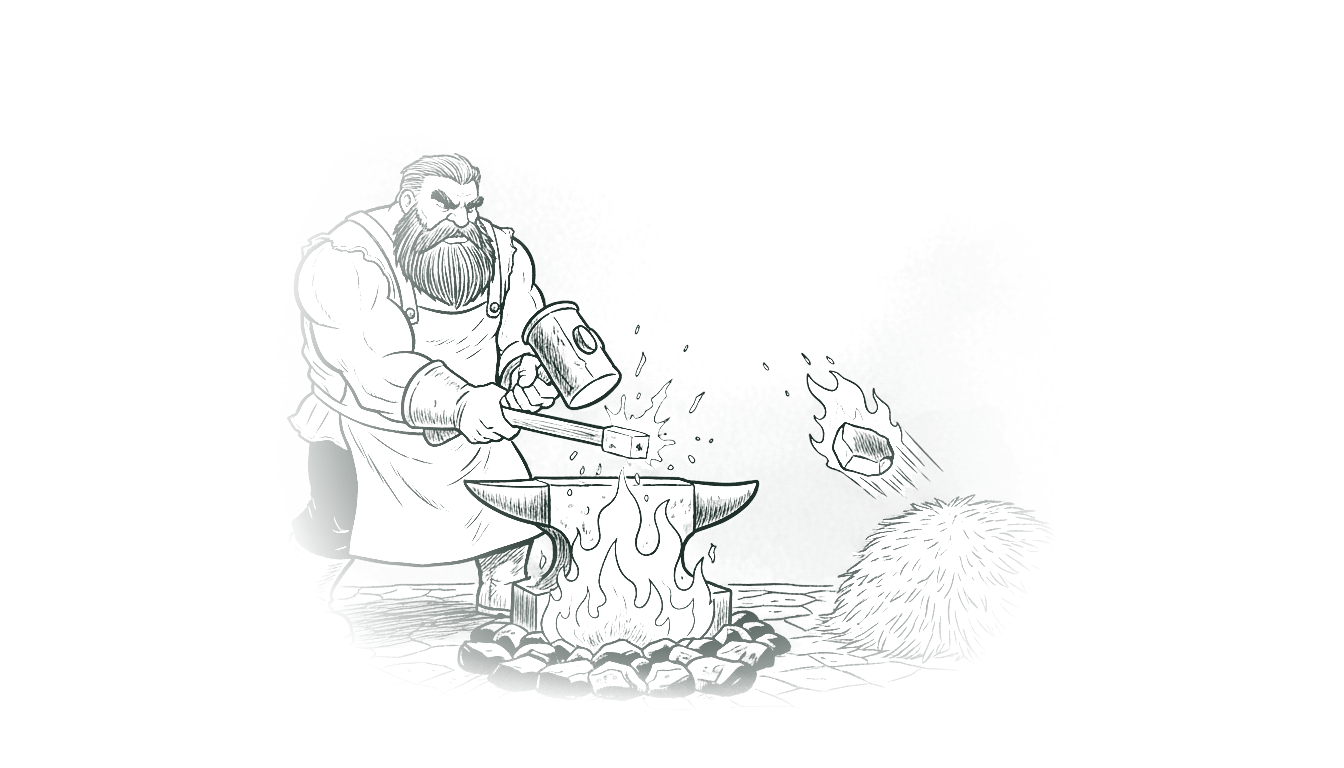 Plate I
The Blacksmith Who Quenches a Burning Coal Before It Spreads
Picture a blacksmith forging metal. A burning coal jumps from the fire and lands on dry straw—if left unattended, it will ignite a blaze that destroys the entire workshop. He quickly grabs a bucket of water and quenches the coal before it spreads. Revenge is that burning coal—small at first, but ready to consume everything if allowed to smolder. The catechism calls believers to extinguish vengeance at the first spark, letting God, not rage, be the judge.
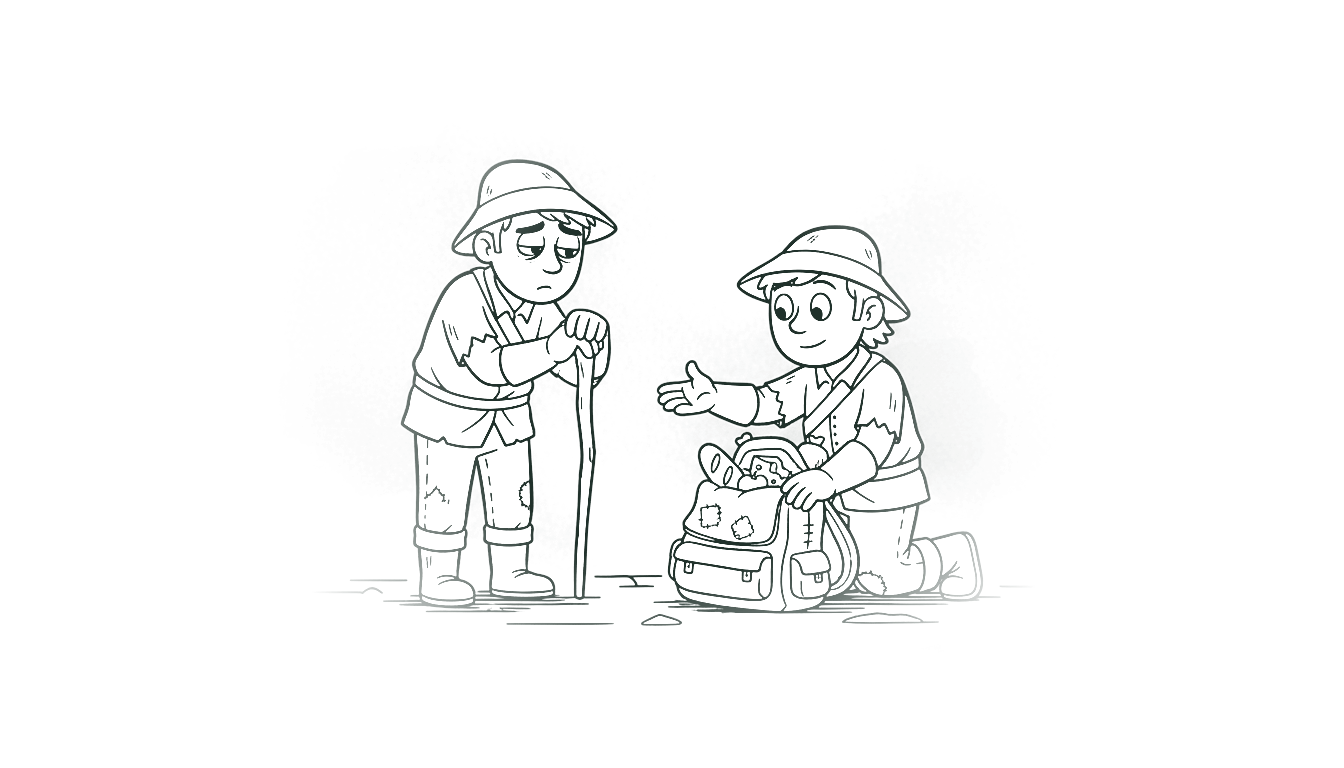 Plate II
The Traveler Who Shares His Bread on a Long Journey
Imagine two travelers. One grows weak and stumbles, lacking food. The other opens his pack and shares his bread—not out of obligation, but because he cannot journey on with a clear conscience while another collapses beside him. Loving a neighbor is this active generosity: seeing a need and stepping toward it, not around it. The catechism anchors obedience in positive love, not merely avoiding harm.
 CommentaryZacharias Ursinus on Lord’s Day 40From the catechism’s chief author · about 14 minutes
The end or design of this commandment is the preservation of the life and health of the body, and so of the safety both of ourselves and of others. All those things, therefore, which have respect to the safety and preservation of our own life and the lives of others, are here enjoined; whilst, on the other hand, every thing is prohibited which tends to the destruction of life, which may be said to include every unlawful injury, and every desire of inflicting a wrong which any one may cherish, with every expression of this desire. It is called murder in this prohibition, or commandment, not because God prohibits this alone, but that in removing the effect he may at the same time remove all the causes which contribute to it, and that embracing under the term murder, all the sins which are connected with it, he may, by showing its aggravated character, the more effectually restrain us from these sins, according to the rule, that when any particular virtue is commanded or vice forbidden, the general virtues and vices, or whatever is connected with it, is at the same time commanded or forbidden.
We must here show, 1. That this commandment enjoins and forbids not only what is external, but also what is internal. 2. That it prohibits any injury done to ourselves or others. 3. That it requires us to defend ourselves and others.
1. That this commandment prohibits and requires what is internal, is proven, 1. By this rule, that when an effect is commanded or forbidden, the cause is also understood as being commanded or forbidden. 2. From the design of this commandment. God does not will that we should injure any one. Therefore he also forbids the means by which we might inflict a wrong upon any one. 3. From the interpretation of Christ: "Whosoever is angry with his brother without a cause shall be in danger of the judgment." (Matt. 5:22.) Hence with external murder there is prohibited at the same time every wrong inflicted upon our neighbor, together with all the causes, occasions and signs of these injuries, such as anger, envy, hatred and desire of revenge.
2. This commandment prohibits every injury, or neglect not only to the lives of others, but also to our own life, inasmuch as the same causes are found in us, on account of which God will have us to regard the lives of others. These causes are, 1. The image of God, which we may not destroy either in ourselves or in others. 2. The likeness of nature, and our common origin from our first parents. For as our neighbor must not be injured and hurt by us because he is bone of our bone and flesh of our flesh, so we are to inflict no wrong upon ourselves, for the reason that no man ever yet hated his own flesh. 3. The greatness of the price, by which Christ has redeemed us and others. 4. The union, or conjunction, which there is between those who are members of Christ. Inasmuch now as these causes are in like manner found in us, it follows that this commandment forbids every injury or neglect which any one may inflict upon himself.
3. This commandment requires us to protect and defend our neighbour; for seeing that the law commands us not only to shun and avoid sin of every description, but also to practice that which is opposite thereto, it is evident that God does not only here forbid us to injure the life and safety of any one, but commands us at the same time, as far as it is in our power, to cherish and defend our neighbor.
The sum and substance of this commandment is, that we neither hurt by any external act our own life, or the life of another, nor practice any injury upon our own, or the bodily safety of another, neither by force, nor treachery, nor negligence; and that we do not desire, either in thought or will, any injury to ourselves or others, nor signify the same by any signs, or words; but that we, on the other hand, as much as in us lies, preserve and protect our own, as well as the lives of others, and so prove ourselves a blessing to all. Hence when this commandment declares, Thou shalt not kill, it signifies, 1. Thou shalt cherish no desire to kill either thyself or others; for what God does not will us to do, that he does not permit us to wish or desire. 2. Thou shalt not express or signify any desire to mur der either thyself or others; for when God forbids any particular desire, he also forbids every expression of this desire, whether it be in the words, gesture or countenance of the person. 3. Thou shalt not put this desire into execution; for what God forbids any one to desire, or to signify by external signs, that he much more forbids to be executed. The opposite now of all this is, Thou shall aid and assist thyself and others, 1. In desire or heart. 2. In the signification of this desire. 3. In the execution of this desire. From this all the virtues of this commandment, as well as all the vices which are opposite thereto, take their origin. The vices which are forbidden in this precept of the Decalogue, tend to the destruction of life; whilst the virtues which it enjoins tend to the preservation of life, or the safety of men.
There are two ways in which we may contribute to the preservation of life; either by not injuring, or by rendering assistance to men. Hence there are two classes of virtues growing out of this commandment—the former including those which do not injure the lives and safety of men, the other including those which contribute to the preservation of life, and the safety of men. The virtues included in the former class consist of three kinds; for we may not injure any one, viz, either being not injured or provoked; or being provoked; or in both respects, whether provoked or not. Particular justice which does wrong to no one is included in the first; in the second, gentleness and equity; in the third, peaceableness. The virtues contributing to the safety of man are two-fold; for we may be said to aid, either by repelling evils and dangers, or by doing good. The first method includes commutative justice, fortitude and indignation; the other includes humanity, mercy and friendship.
The virtues which do not injure the safety of men
I. PARTICULAR JUSTICE, injuring no one, is that, which does not injure the life or body of any one, neither from design, nor from negligence, by whom we have not been injured, unless God require it at our hands. Or it is a virtue which carefully avoids every injury which might be inflicted upon our own, or upon the safety of our neighbor, whether it be by violence, deceit or negligence. This is expressed in the words of the commandment, Thou shalt not kill.
That which is opposed to this virtue, and condemned by this commandment, includes,
1. Every injury which may be inflicted, either by design or by negligence, upon our own, or upon the life and body of another.
2. Excessive lenity, by which it comes to pass that they are not punished, who ought to be punished by those who are vested with the power to do so.
II. GENTLENESS, or placability, or readiness to forgive, which is a virtue, governing and controlling anger, is not provoked without any cause, nor by one that is trifling in its character; and where there is a cause of just displeasure, it does not desire the destruction of the person inflicting the wrong; but is indignant at the reproach which is cast upon the name of God, or at the injustice and injury inflicted upon our neighbor—it indulges no desire of revenging any injury however great it may be, but heartily desires the safety and well-being even of enemies, and those who deserve ill at our hands, and endeavors to contribute thereto according to its own ability and their necessity. Or it is a virtue which moderates anger, and shows itself in shunning all unlawful excitement, and so moderates that anger which is lawful, that it does not pass beyond the limits which God has prescribed, and does not burn with a desire of revenge, but extends pardon even to enemies notwithstanding their offences and provocations have been great and heavy; so that the anger which is felt is not directed to the persons, but to the sins of the wicked, and that, too, in such a way that it desires the safety even of those who transgress under the most aggravated form. "Blessed are the meek; for they shall inherit the earth." (Matt. 5:5.)
The opposite of this virtue comprises,
1. Undue lenity, which is not to be indignant in view of shocking injuries, and which does not restrain or punish them, or is, at least, too remiss in prohibiting and suppressing them.
2. Hastiness of temper, with every form of unlawful and immoderate anger
3. Desire of vengeance, grudging and animosity.
III. EQUITY is a virtue closely allied to gentleness. It is the governness of stern justice (preserves a just proportion between punishment and crime) upon just and probable causes, as when in view of the crime itself, or our own duty, or the public and private safety of those who sin, or for the sake of avoiding offence, we yield somewhat of our right in punishing sins, or in demanding satisfaction for injuries received. "Let your moderation be known unto all men." (Phil. 4:5.)
The first thing which we may mention as opposed to this virtue is, immoderate severity or cruelty, as when there is no proper regard to the circumstances under which men do wrong, concerning which it is said, extreme right is extreme wrong.
2. Too great lenity, which shows itself in not being influenced by those things which ought to influence us, as when God commands, &c.
3. Partiality.
IV. PEACEABLENESS, or a desire of peace and harmony is a virtue which consists in diligently and carefully avoiding all unnecessary occasions and causes of offence, discord, strife and hatred, and in reconciling those who are offended, either at us, or at others, and which for the sake of retaining or preserving peace does not shrink from troubles, or from the endurance of injuries, so long as there is no reproach cast upon the name of God, or grievous wrong inflicted upon our own safety or that of others. In a word, it is a virtue avoiding all offences and occasions of anger and discoid, and which at the same time endeavors to remove and bring to an end such strifes and misunderstandings as arise from time to time.
There is opposed to this virtue,
1. Quarrelsomeness, which shows itself in giving and seizing occasions of strife, to which there is attached an eager desire or delight in contention, slandering, backbiting, whispering, &c. Hence all contentious persons, slanderers, backbiters, wisperers, &c., are here condemned.
2. Such a lenity as when any one desires to keep peace without any proper regard to the glory of God, or his own and neighbor's safety. This is a sinful gratification.
The virtues which contribute to the safety of men
V. COMMUTATIVE JUSTICE IN PUNISHING is a virtue which preserves an equality between offences and punishments, inflicting either equal punishments, or less in view of just and satisfactory causes, having a proper regard to the circumstances which should ever be taken into consideration in civil courts, for the sake of maintaining the glory of God, and the preservation of human society. For when God forbids the infliction of any wrong upon society, and wills that the magistrate be the defender and preserver of order according to the whole Decalogue, he also designs that those who manifestly and grossly violate this order be restrained and kept within proper bounds by just punishments. The magistrate, therefore, may be guilty of doing wrong not only in being cruel and unjustly severe, but also in being too lenient and in granting permission to certain persons to injure others. "Because thou hast let go out of thy hand, a man whom I appointed to utter destruction, therefore thy life shall go for his life, and thy people for his people." "He that killeth any man, shall surely be put to death." "Ye shall take no satisfaction for the life of a murderer, which is guilty of death; but he shall surely be put to death. (1 Kings 20:42. Lev. 24:17. Num. 35:31.) This form of justice, therefore, belongs to this commandment.
Obj. It is here said, Thou shalt not kill. Therefore no one must be put to death—consequently this justice is not comprehended in this commandment inasmuch as it cannot be maintained, without putting many to death. Ans. Thou shalt not kill, that is, not thou who art merely a private person, according to thy judgment and desire, when I do not command thee, and give thee any warrant from this law. But this does not do away with the office of the magistrate; "for he is the minister of God and does not bear the sword in vain." (Rom. 13:4.) Hence when the magistrate puts wicked transgressors to death, it is not man, but God who is the executioner of the deed. We may also reply to this objection by reversing the argument thus: Therefore some are to be put to death, lest human society be destroyed by thieves and robbers.
The opposite of this virtue is,
1. Cruelty, or too great severity.
2. Private revenge.
3. Lenity, when those are not punished who ought to be punished.
4. Partiality.
Or to express it more briefly we may say that the opposite of commutative justice is injustice, which either deos not punish at all, or else punishes unjustly.
VI. FORTITUDE is a virtue which braves such dangers as sound reasons requires us to meet and encounter for the glory of God, the salvation of the church and commonwealth, and for the preservation and defence either of ourselves or others against grievous wrongs and oppressions. The fortitude of the saints springs from faith, hope, and the love of God and our neighbor. Heroic fortitude is a special gift of God, as in the case of Joshua, Sampson, Gideon, David, &c. Warlike fortitude is the defender of justice, and the undertaker of just defence respecting ourselves and others, although it is not accomplished without great danger. War is either a necessary defence against such as are guilty of robbery, cruelty or oppression; or it is a just punishment for wicked outrages, which is undertaken by the force of arms by the ordinary power.
The opposite of this virtue comprises timidity, which shows itself in flying from necessary dangers; and presumption, or fool-hardiness in rushing into clangers unnecessarily.
VII. INDIGNATION, or zeal is, from a love of justice, and from a regard to our neighbor, to be indignant on account of some grievous or outrageous wrong inflicted upon the innocent, and which, according to the ability which any one possesses, endeavors to repel and revenge the wrong according to the commandment of God. Or, it is a virtue which is justly provoked and indignant on account of reproach cast upon the name of God and on account of some grievous wrong by which either God, or our neighbor is injured.
There is opposed to this,
1. Unjust anger.
2. Lenity, or remissness, which shows itself when there is no just grief or indignation felt in view of grievous injuries, and when there is no disposition to avenge them.
VIII. HUMANITY, or philanthropy, specially and properly so called, is a true and sincere good will, and desire to perform towards men what we desire others to perform towards us, with a declaration of good will in such words, actions and duties as are fit and becoming. Or it is benevolence in the mind, will and heart towards others, and a declaration of it in such words, actions and duties, as are possible and proper. This virtue is likewise called in the holy Scriptures the love of our neighbor. Philosophy terms it humanity. All men, by this virtue, perform towards others what they desire others to perform towards themselves. "Let us do good unto all men, especially unto them who are of the household of faith." (Gal. 6:10.)
The opposite of this virtue comprises,
1. Inhumanity, or moroseness, which either omits doing those things which humanity requires, or does the opposite.
2. Ill-will, or envy, which shows itself in grief at the good and prosperity of others, and in a desire to secure this good to itself, or at least to avert it from others. Mir nicht, dir nicht.
3. Self-love, with a neglect of our neighbor.
4. Unlawful gratification.
IX. MERCY is a grief felt in view of the calamities and misfortunes of the innocent, or such as fall through weakness and infirmity, with a desire and attempt to mitigate these calamities. Or it is a virtue which pities good men in their calamities, or those who sin through ignorance or infirmity, and which desires to remove their misfortunes, or at least alleviate them as much as justice will admit of, and which rejoices not in the calamities even of such as are our enemies. "Blessed are the merciful, for they shall obtain mercy." (Matt. 5:7.)
There is opposed to this virtue on the side of want,
1. A want of mercy, or cruelty and hard-heartedness, which is seen in not having compassion upon those whom we ought to commiserate.
2. Rejoicing in the calamities of others. And on the side of excess we may mention lenity, as that which spares those whom God wills to be punished, which is a cruel mercy, by which society itself is injured, and also the person that is spared.
X. FRIENDSHIP, a species of humanity, is a true and mutual good will between good men, formed by a knowledge which each party has of the other's virtues, or by the performance of such duties towards each other as are becoming and possible. "A man that hath friends must show himself friendly; and there is a friend that sticketh closer than a brother." (Prov. 13:24.)
The extremes of friendship are,
1. Enmity.
2. Neglect of friends.
3. Readiness in contracting and breaking friendship.
4. Flattery.
5. Unjust gratification.
Sing this Lord’s Day
A confessional hymn by Paul Wagenaar that puts Lord’s Day 40 to verse, for children and adults alike.