Lord’s Day 9 · Part II: Deliverance
God the Father & Creation
Taught by a pastor from the Reformed churches. The whole series on YouTube
Free video courseTake this Lord’s Day as a step in the course, with checkpoints along the way and a certificate at the end.Go to the courseAnswers are hidden. Say each one, then tap it to check.
What do you believe when you say, “I believe in God, the Father Almighty, Creator of heaven and earth”?
That the eternal Father of our Lord Jesus Christ, who out of nothing created heaven and earth and everything in them,1 who still upholds and rules them by his eternal counsel and providence,2 is my God and Father for the sake of Christ his Son.3 I trust God so much that I do not doubt he will provide whatever I need for body and soul,4 and will turn to my good whatever adversity he sends upon me in this vale of tears.5 He is able to do this because he is almighty God;6 he desires to do this because he is a faithful Father.7
What believest thou when thou sayest, "I believe in God the Father Almighty, maker of heaven and earth?"
That the eternal Father of our Lord Jesus Christ (who of nothing made heaven and earth, with all that is in them: who likewise upholds and governs the same by his eternal counsel and providence), is for the sake of Christ his Son, my God and my Father; on whom I rely so entirely, that I have no doubt, but he will provide me with all things necessary for soul and body: and further, that he will make whatever evils he sends upon me, in this valley of tears, turn out to my advantage; for he is able to do it, being almighty God, and willing, being a faithful Father.
What dost thou believe when thou sayest: I believe in God the Father Almighty, Maker of Heaven and Earth?
That the eternal Father of our Lord Jesus Christ, who of nothing made heaven and earth, with all that in them is, who likewise upholds and governs the same by his eternal counsel and providence, is for the sake of Christ his Son my God and my Father, in whom I so trust as to have no doubt that he will provide me with all things necessary for body and soul; and further, that whatever evil he sends upon me in this vale of tears, he will turn to my good; for he is able to do it, being Almighty God, and willing also, being a faithful Father.
Was glaubest du, wenn du sprichst: Ich glabe in Gott Vater, den Allmächtigen, Schöpfer Himmels und der Erden?
Daß der ewige Vater unsers Herrn Jesu Christi, der Himmel und Erde, sammt allem, was darinnen ist, aus nichts erschaffen, auch dieselbigen noch durch seinen ewigen Rath und Fürsehung erhält und regieret, um seines Sohnes Christi willen mein Gott und mein Vater sei, auf welchen ich also vertraue, daß ich nicht zweifle, Er werde mich mit aller Nothdurft Leibes und der Seele versorgen, auch alles Uebel, so Er mir in diesem Jammerthal zuschicket, mir zu gut wenden, dieweil Er's thun kann, als ein allmächtiger Gott, und auch thun will, als ein getreuer Vater.
- 1Gen. 1-2; Ex. 20:11; Ps. 33:6; Isa. 44:24; Acts 4:24; 14:15
- 2Ps. 104; Matt. 6:30; 10:29; Eph. 1:11
- 3John 1:12-13; Rom. 8:15-16
- 4Ps. 55:22; Matt 6:25-26; Luke 12:22-31
- 5Rom. 8:28
- 6Gen. 18:14; Rom. 8:31-39
- 7Matt. 7:9-11
TranscriptRead the film: Lord’s Day 9Tap a time to play the film from there · transcribed from the film
, question 26. What do you believe when you say, I believe in God the Father Almighty, creator of heaven and earth, that the eternal Father of our Lord Jesus Christ, who out of nothing created heaven and earth and everything in them, who still upholds and rules them by his eternal counsel and providence, is my God and Father for the sake of Christ his Son. I trust God so much that I do not doubt he will provide whatever I need for body and soul and will turn to my good, whatever adversity he sends upon me in this veil of tears. He is able to do this because he is Almighty God.
He desires to do this because he is a faithful Father. Well, here in Lord’s Day 9, the Catechism begins its treatment of the Articles of the Apostles’ Creed. In Lord’s Day 8, we were taught that there is but one divine being who has revealed himself to us in his word in three distinct persons, God the Father, God the Son, and God the Holy Spirit. And Lord’s Days 9 and 10 begin to explain to us what it means to have God as our Father, the Christian’s unique comfort of knowing God as Father. And Lord’s Day 9 begins by telling us that the Father is the creator of the world, that as we know from Genesis 1 verse 1, in the beginning, God created the heavens and the earth, and he did so out of nothing.
God spoke the world into existence. He said, let there be light, and there was light. And this truth, according to Hebrews 11 verse 3, is one of the family secrets of the Christian faith. That is, Hebrews 11 verse 3 says, by faith we understand that the universe was created by the word of God, so that what is seen was not made out of things that are visible. Apart from faith in the Lord Jesus Christ, the Apostle Paul says that we suppress this truth in unrighteousness. Man, by nature, and his sin, and rebellion against God, man rejects the idea that there is a God who has created him.
He rejects the idea. There’s a God who has a purpose for him, and a God who has designed him. And he certainly rejects the notion that a day is coming when all men will give an account to this God and creator of the world. And what a terrible day that will be for the unrighteous and ungodly. But not so for the Christian. Because the Christian has not only come to know God as creator, but the Christian has come to know God as his father. According to Lord’s Day 9, the very same God who created the world, the very same God who upholds the world by his eternal counsel and providence, is also my God and father for the sake of Christ, his son.
And so here in Lord’s Day 9, we’re already introduced to this doctrine of adoption, that for the sake of Christ, his son, God has become my father too. I have been adopted into the family of God, and so I share in all the benefits and blessings of belonging to Jesus Christ as my faithful Lord and Savior. And because I belong to Christ, because Christ is my Savior, Lord’s Day 9 teaches me that I can trust God no matter what. I can trust that God will provide whatever I need for body or for soul. As Paul says in Romans 8, 32, He who did not spare his own son, but gave him up for us all, how will he not also with him graciously give us all things?
God will provide whatever I need for body and soul. And not only that, but even when tragedy strikes, I can trust God and not doubt that he will turn to my good, whatever adversities he sends my way in this veil of tears. And it’s worth pointing out here in Lord’s Day 9, as well as in other Lord’s Days, that our catechism is very honest about the world in which we live. That we stand in need of comfort implies that without God, without his saving intervention, we would be utterly uncomfortable. We have no comfort apart from God as our father. We live in a sad world. The catechism refers to this world as being a veil or a valley of tears.
Because when sin entered the world, tears quickly followed. In this life, we’re met with many trials and tribulations, and we shed many tears. And according to our catechism, these trials and tribulations come to us from the hand of our father himself. It’s our father himself who sends his adversities our way. He does so, according to James 1, so that by the testing of our faith, it might produce a steadfastness of faith. And so this is the believer’s confession.
His resounding confession in this sad world, in this valley of tears, is I trust God. I trust him. He’ll provide whatever I need for body and soul. He’ll look after all my physical needs, as well as all my spiritual needs. And he’ll turn to my good, whatever adversity he sends upon me in this sad world. I trust God because he’s able to do this. I trust him because, as Lord Zainine says, he is almighty God. As Jeremiah 32, verse 17 says, nothing is too hard or too difficult for the Lord. As our boys and girls learn to sing it at such a young age, my God is so great, so strong and so mighty.
There’s nothing my God cannot do. But here’s the wonder of our adoption. Our God is not only able to provide for all our needs, physical and spiritual. He is not only able to turn to our good, whatever adversity he sends upon us in this sad world. But even more than that, he desires to do so. Because he’s not just almighty God, he’s also a faithful father. In other words, what the catechism is saying is that when God sees you in your neediness, when he sees you in your sin and misery, when he sees you drowning in your tears, and in this world that is a valley of tears, there is nothing that the father loves to do more than to draw near to you and give you his aid.
The father indeed sees our tears. As David says, in the midst of his distress, he says, You have kept count of my tossings and turnings. You’ve put my tears in your bottle. David takes comfort in knowing that in the midst of all his distress and anxieties of this life, God sees him tossing and turning at night. God understands his tossings and turnings. God sees his tears. And those tears, far from repelling God away from David, in fact, draw him closer to David.
Isn’t it the case that when a child is sick and in the hospital, that the tears of that child draw forth greater compassion from his father’s heart? And according to our caddics, and that’s the way it is with our Heavenly Father as well, our tears draw forth greater tenderness and compassion from his heart as he takes compassion on us, as he pities us, as a father has compassion on his children, so the Lord has compassion on those who fear him, Psalm 103 says. And so Peter says, Humble yourselves, therefore, under the Almighty hand of God, so that at the proper time he may exalt you, casting all your cares, casting all your anxieties upon him, because he really does care for you.
Far from our neediness repelling God away from us, our neediness, in fact, draws God closer to us. And this is what it means to confess, I believe in God, the Father Almighty, creator of heaven and earth. This is what we should have on our minds every time we confess this truth, Sunday after Sunday, I trust God because the God of the Lord Jesus Christ has become my God and Father too for the sake of Christ his Son. And so I can trust him. I can trust he’ll provide whatever I need for body and soul. I can trust he’ll turn to my good, whatever adverse he sends my way in this sad world.
I can trust that he’s able to do this because he’s almighty God. But more than that, he, in fact, desires to do this. because he’s a faithful father.
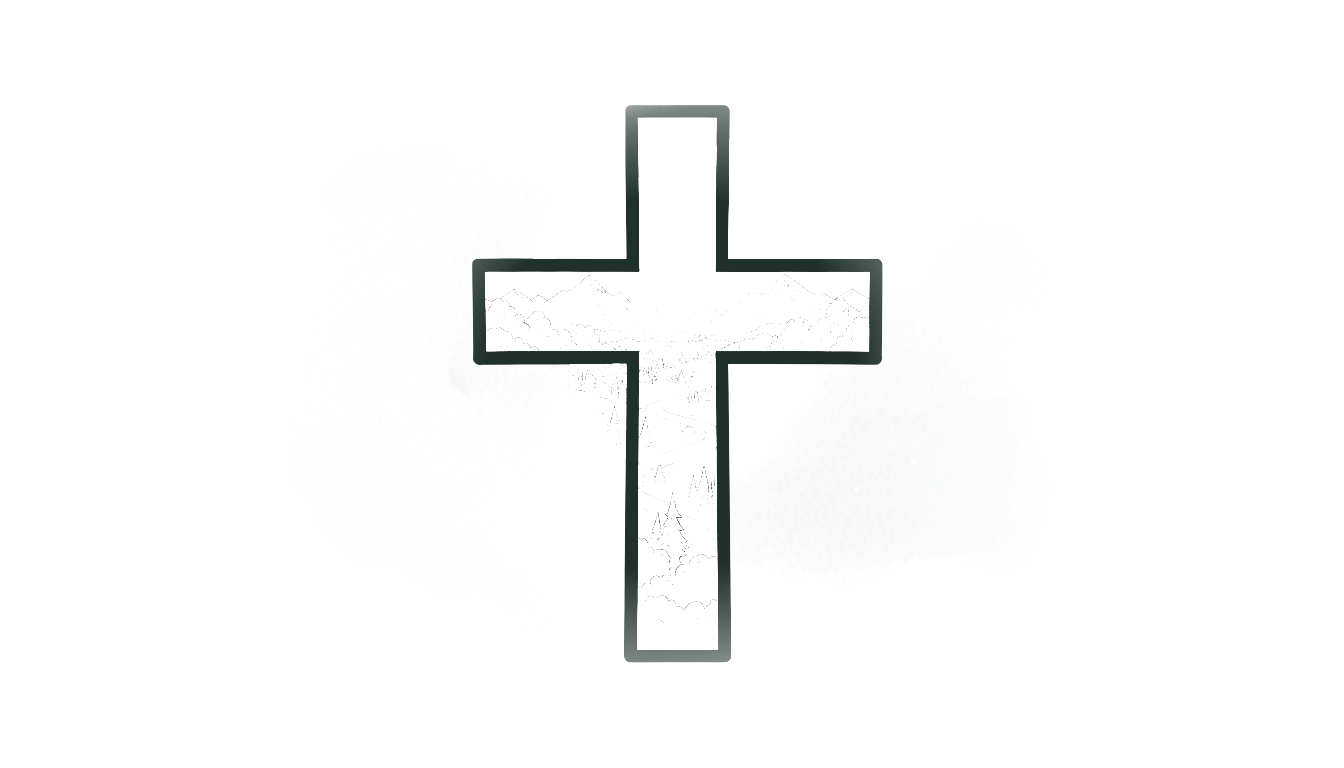 Plate I
The Window That Shows What Was Always There
Imagine standing in a dark room with only vague impressions of what the world outside might be like. Then someone opens a window, and suddenly you see a vast landscape—mountains, trees, streams—that had been there all along. Christ is that window into the heart of God. The catechism insists that the Father we believe in is not a distant or unknown deity but the very God revealed in the face of Jesus Christ. Through Christ we see what was always true: the Father is infinitely good.
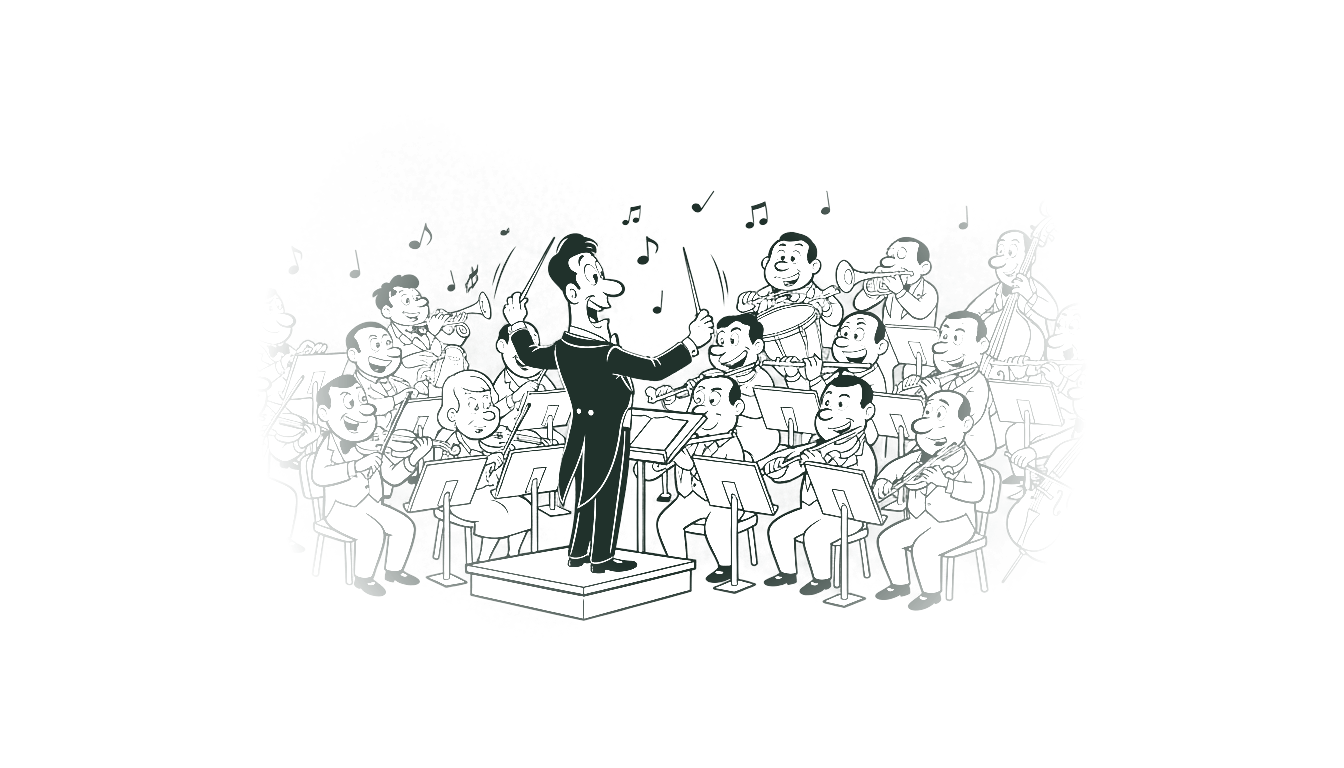 Plate II
The Conductor Who Never Leaves the Podium
Picture an orchestra playing an hour-long symphony. If the conductor stepped down even for a few seconds, the timing, unity, and direction would immediately collapse into chaos. God’s providence is like a conductor who never leaves the podium—every moment of harmony or dissonance ultimately remains under His sovereign direction. The catechism teaches not merely that God created all things long ago, but that He continually sustains and governs them now. Creation is not a wound-up clock; it is music under an ever-present hand.
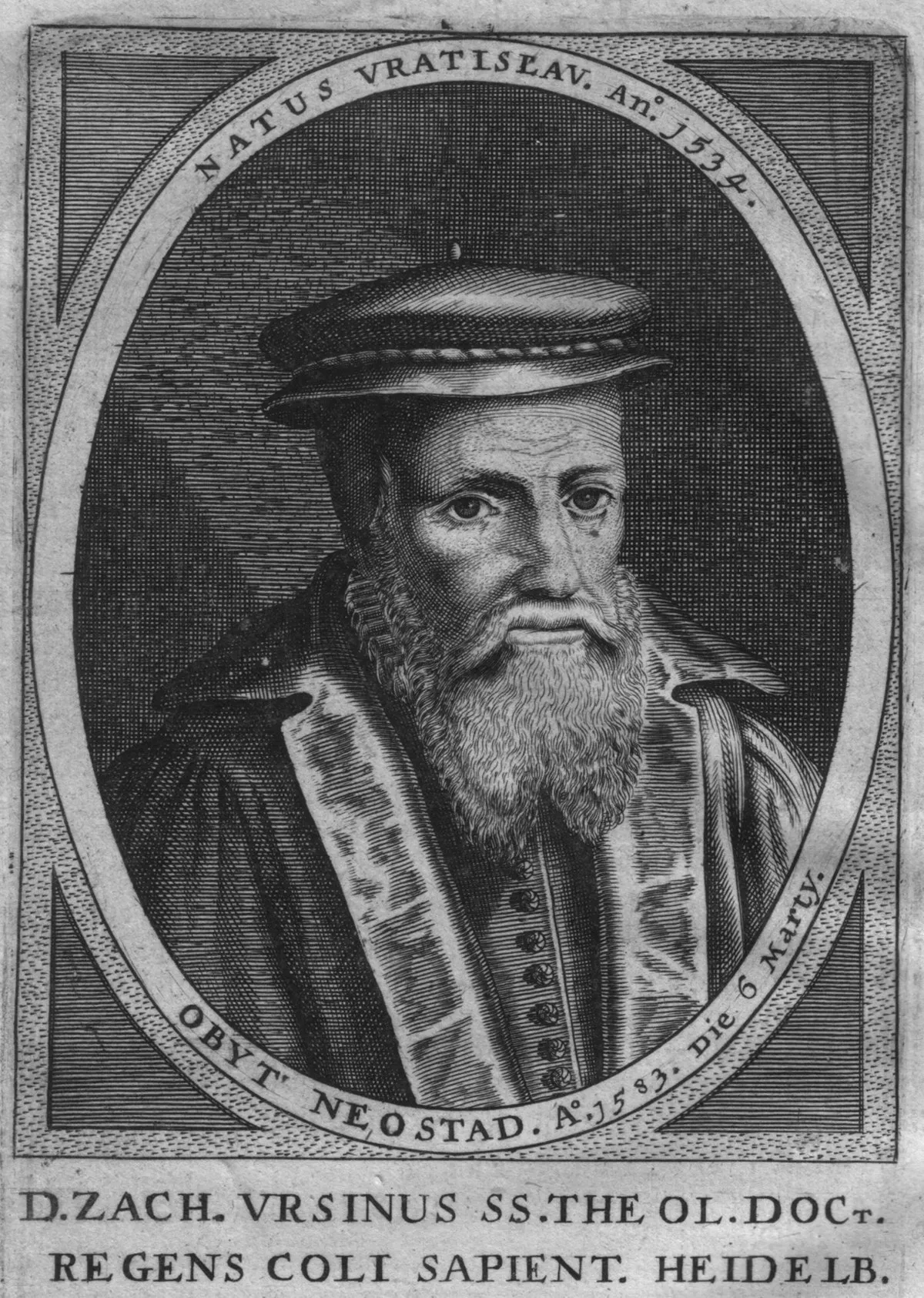 CommentaryZacharias Ursinus on Lord’s Day 9From the catechism’s chief author · about 18 minutes
Question 26
What do you believe when you say, “I believe in God, the Father Almighty, Creator of heaven and earth”?
I believe in God. To believe God and to believe in God, are two very different things. The first expresses historical faith; the latter, true faith or confidence; for when I say, I believe that God is, if I speak properly, I believe there is a God, and that he is such an one as he hath revealed himself in his word, viz: a spiritual essence, omnipotent, &c., the eternal Father, Son, and Holy Ghost. When I say, I believe in God, I mean, I believe that he is my God, that is, whatever he is and has is all for my salvation. Or, to believe God, speaking properly, is to believe a certain person to be God, according to all his attributes. To believe in God, is to be persuaded that he will make all things attributed to him subservient to my salvation, for the sake of his Son.
In God. The name of God is here taken essentially for God the Father, Son, and Holy Ghost; because the phrase I believe, with the particle in, is referred in the same manner to all the three persons of the Godhead; for the reason that we do not believe in the Son and Holy Ghost less than we do in the Father.
Father. When the name of the Father is opposed to the Son, it is taken personally, and signifies the first person of the Godhead, as here in the creed; but when it is opposed to creatures it must be understood essentially, and signifies the whole divine essence, as in the Lord's prayer, Our Father who art in heaven. In this sense the Son is expressly called by Isaiah, "The everlasting Father." (Is. 9:6.) The first person is called the Father:
1. In respect to Christ, his only begotten Son.
2. In respect to all creatures, as he is the Creator, and Preserver of them all.
3. In respect to the elect, whom he hath adopted as his children, and whom he hath made accepted in his beloved Son.
To believe in God the Father, therefore, is to believe in that God who is the Father of our Lord Jesus Christ; and to believe that he is also my Father, and as such has a fatherly affection toward me, for and on account of Christ, in whom he has adopted me as his son. In a word, it is to believe:
1. That he is the Father of our Lord Jesus Christ.
2. That he is a Father to me for Christ's sake.
Obj. 1. I believe in God the Father. Therefore, the Son, and Holy Ghost are not God, but the Father alone. Ans. This is a fallaoy of composition and division; for the word God is joined with the Father in such a manner as not to be separated from the Son and Holy Ghost; a comma should be placed after the words in God, in this manner—I believe in God, the Father. This is proven:
1. Because the name God, as it is here used in the creed, signifies essentially, and embraces the three persons, which are, as if by apposition, placed in order in the creed—I believe in God, the Father; and in Jesus Christ his only begotten Son; I believe in the Holy Ghost. For, I believe in the one true God, who is the Father, the Son, and the Holy Ghost, yet so that the Father is not the Son, nor the Holy Ghost the Son or the Father.
2. We expressly profess that we believe in the Son, and Holy Ghost, not less than in God, the Father. And yet we do not believe in any one else, except in the one only true God.
3. Many of the Greek copies read, I believe in one God, to wit, Father, Son, and Holy Ghost. As we are, therefore, to believe in the Father, because he is God, so we are also to believe in the Son and Holy Ghost, because they are God. The name of God is placed but once in the creed, because God is only one, but never as if the Father alone were called God.
Almighty. To believe in God Almighty, is to believe in such a God:
1. Who is able to accomplish whatever he wills, yea even those things which he does not will, if they are not contrary to his nature, as he might have delivered Christ from death, but he would not.
2. Who can accomplish all things by his simple command, and without any difficulty.
3. Who alone has power to do all things, and is the dispenser of that power which is in all his creatures.
4. Who is also almighty for my benefit, and can and will direct and make all things subservient to my salvation.
Obj. God cannot lie, die, or undo that which is once done. Therefore, he cannot do all things. Ans. He can do all things which are indicative of power. But to lie, to die, &c., is no sign of power, but of infirmity or want of power. But defects are in creatures, not in God. Therefore, they are contrary to the nature of God. Hence, by inverting the order of reasoning, we thus conclude, God is not able to do or will those things which are indicative of weakness, and contrary to his nature; therefore, he is almighty.
Maker of Heaven and Earth. To believe in the Creator, is to believe:
1. That he is the Creator of all things.
2. That he sustains and governs by his providence all things which he has created.
3. That he has also created me, and made me a vessel of his mercy, that I should obtain salvation in Christ; and that he, by his special providence and grace, will lead me to that salvation which he confers upon his people.
4. That he has created all other things for us, that they may contribute to the salvation of the church, to the praise of his glory. In short, to believe in the Creator, is to believe that God created me that I might contribute to his glory, and that he created all other things that they might be subservient to my salvation. "All things are yours, and ye are Christ's, and Christ is God's," as if he should say all things are created for us, and we for God. (1 Cor. 3:22, 23.)
OF THE CREATION OF THE WORLD
The doctrine which treats of the works of God is properly placed next in order after the doctrine concerning God, which is also the arrangement in the creed. There are five general works of God:
1. The work of creation, of which we have an account in the book of Genesis, where we are informed that it was accomplished in six days.
2. The work of preservation, by which God sustains heaven and earth, and all things which he has created, so that they do not fall into ruin.
3. The work of government, whereby, through his great wisdom, he directs and governs all things in the world.
4. The work of restitution, by which he repairs, in Christ, all things which are subject to corruption, by reason of the sin of man.
5. The work of perfection, or completing, in which he brings all things to their appointed end—but especially does he perfectly deliver and glorify his church.
We shall now speak of the work of creation, or of the creation of the world, in reference to which we must enquire:
I. Did God create the world?
II. How did he create it?
III. Wherefore, or for what end, did he create it?
I. DID GOD CREATE THE WORLD?
We must first define and understand what is meant by the terms here used. To create is to produce something out of nothing. The term world is used in the Scriptures in four different significations. It means: 1. The structure, or frame, of the whole universe, comprising heaven, earth, and all things which are in them. "The world was made by him." (John 1:10.) 2. Worldly concupiscence. 3. The ungodly, or unregenerate, who are in the world. (John 17:9.) 4. Those who are chosen out of the world. "That the world may believe that thou hast sent me." "God so loved the world." (John 17:21; 3:16.)
That God created the world, we know: First, from the testimony of the holy Scripture, as, for instance, from the history of the creation as written by Moses. Also, from other passages of Scripture, and especially the following: "By the word of the Lord were the heavens made, and all the hosts of them by the breath of his mouth." "He spake, and it was done; he commanded, and it stood fast." (Ps. 33:6, 9.) There are other places also, in the Psalms, and elsewhere, where the wonderful works of God are more largely spoken of, and where the principal parts of the world, which God created, are dwelt upon, in order that we may, by a proper consideration of them, be led to trust in God. (Ps. 104, 113, 124, 136, 146.) God himself shewed unto Job his marvellous and inconceivable works, as they appear in the heavens and earth, in connection with other things which he had created, that he might declare his justice, power, and providence. (Job 38 and 39.)
Secondly, beside the testimony of the Scriptures, there are many other arguments which prove in the most satisfactory manner, that the world was created by God; among which we may mention the following:
1. The origin of nations, as given by Moses, shows this, which account could not have been invented by him, when there were some remembrances of it still in the minds of many, which, however, in the course of time became lost.
2. The novelty of all other histories as compared with the antiquity of sacred history.
3. The age of man decreasing, shows that there was at first a greater strength in nature, and that it has decreased hitherto not without some first cause.
4. The certain course of time from the beginning of the world, down to the coming of the Messiah.
5. The constitution and preservation of commonwealths.
6. The order of things in nature, which must, of necessity, have been produced by some intelligent mind— superior to all things.
7. The excellency of the mind of man and of angels. These intelligent beings have a beginning. They must, therefore, have sprung from some intelligent cause.
8. The natural principles and notions which are engraven upon our hearts.
9. The chidings, or reproofs of conscience in the ungodly.
10. The ends of all things wisely ordered.
11. Finally, all the other arguments which prove that there is a God, prove also that the world was created by him.
Thirdly, there are, also, philosophical arguments, which go to prove that the world was created, and that by God, although they cannot prove when it was created. 1. There is, in nature, no infinite progress of causes and effects; otherwise, nature would never attain its end. Therefore the world had a beginning. 2. The world is the first and most excellent of all effects. Therefore, it is from the first and most excellent cause, which is God.
But there are other questions, as, whether the world was created by God from all eternity, or in time; that is, whether it be an effect of equal perpetuity with his own cause, or had it at some time a beginning, prior to which it had no existence? Also, if there was a time wher the world did not exist, was it necessary that God should create it? Also, whether it shall endure forever; and if so, will it remain the same, or will it be changed? These, and similar questions, cannot be decided by philosophy; and the reason is because all these things depend upon the will of the first mover, which is God, who does not act from necessity, but most freely. But the will of God is not known to any creature, unless God himself reveal it. Hence it is that we find it in the church alone, whilst heathen philosophers are ignorant of it: for they cannot arrive at any knowledge of these things by reasoning a posteriori, that is, from a continued effect to its cause. It is true, indeed, that there is a certain cause of these effects, but it does not follow that these effects were produced by this cause either at this or that time, or from all eternity, because a free agent may either act or suspend his action, at pleasure. The sum of the proof is this: no effect, that is depending upon such a cause as acts freely, or contingently, can be demonstrated by that cause. The creation of the world is such an effect. Therefore, it cannot be proven by the will of the first mover, which is God, that it was either created from all eternity, or that it had its beginning in time.
Whatever arguments philosophers may, therefore, bring against the creation of the world, it is easy to see that they are not drawn from true philosophy, but from the imaginations of men, if the order of the generation and change of things which God established in nature, be distinguished from the creation.
Obj. 1. It is absurd (philosophers tell us) to suppose that God is idle. Ans. It is, indeed, absurd to say that he who governs the world is idle. And if it be further objected to this, that he could not govern the world when as yet it did not exist, and that he must, therefore, have been idle before the creation of all things, we reply by denying the consequence; because, if God did not, from everlasting, govern the world, yet he was not idle; for he chose us in Christ before the foundation of the world, and constructed hell for wicked and curious men, who presumptuously endeavor to pry into the secret counsels of the Most High, as Augustin wittily answered a certain African, demanding of him what God did before he created the world; "He made hell," said he, "for curious and inquisitive men."
Obj. 2. Every thing which has a beginning, has an end. The world has no end. Therefore it had no beginning. Ans. The major is to be distinguished. Every thing that has a beginning through natural generation has an end; for corruption does not follow creation, but the generation of one thing out of another, by the order of nature. And the power of God is certainly sufficient, that he can either preserve in the same state, or change, or reduce to nothing, as well those things which he formed out of others, as those which he produced out of nothing.
II. HOW DID GOD CREATE THE WORLD?
1. God, the Father, created the world through the Son and Holy Ghost. Of the Son, it is said, "All things were made by him." (John 1:3.) Of the Holy Ghost, it is said, "The Spirit of the Lord moved upon the face of the waters." "The Spirit of God hath made me." (Gen. 1:2. Job 33:4.)
2. God created the world most freely, without any constraint. There was no necessity in the case, but such as resulted from the decree of his own will, which, although it was eternal and immutable, was, nevertheless, most free. "For he spake, and it was done." "But our God is in the heavens, he hath done whatsoever he pleased." (Ps. 33:9; 115:3.)
3. God made the world by his simple command, word, and will, without any labor, fatigue, or change of himself, which is the highest form of working. There are five kinds of operations or agents:
1. There are natural agents, which operate according to the force of their own nature, without any intelligence or will; such is the operation of fire, water, medicinal herbs, precious stones, &c., the action and operation of which is marked out by nature.
2. We have other operations, or agencies, which although they are greatly controlled by nature, are, nevertheless, not without some desire or will of their own, even though the government of reason be wanting. Yet the action of these agents is of such a nature, that it is oftentimes forced from them against their will, which may be said to be true of animals.
3. Are the agencies of men, who act according to their corrupt desires and inclinations.
4. Are the agencies of good spirits whom we call angels, who act according to reason, and willingly, as men do, but who are free from corruption.
5. The highest and most complete kind of operation is that which results from an understanding and will most pure and holy; which is subject to the wisdom and counsel of no one who is superior; which is, therefore, of all others, the most free, wise, and good, and which is truly infinite, such that all other things depend upon it alone. Such is the operation or agency of God alone. "He spake, and it was done; he commanded and it stood fast." "God who quickeneth the dead, and calleth those things which be not as though they were." (Ps. 33:6, 9. Rom. 4:17.)
4. God created all things out of nothing. It was not, therefore, from any essence of Deity, nor from any pre-existing matter co-equal with himself, from which God created the heavens and the earth. For if all things were created by God, nothing is excepted but the Creator himself, so that all other things were created, not even excluding the matter out of which they were formed.
Obj. Out of nothing is nothing. Ans. According to the order of nature as it is now constituted, it is true, that one thing is generated or produced from another. It is also true that nothing can be produced out of nothing by men; but what is impossible to man is possible with God. Hence, this proposition, out of nothing is nothing, is not true when applied to God. Nor is it true of the first creation, or of the extraordinary working of God, but only of the order of nature as it is now established. That God created all things out of nothing, should contribute to our comfort; for if he has created all things out of nothing, he is also able to preserve us, and to restrain, yea, to bring to naught the counsels and devices of the wicked.
5. God created all things most wisely, and very good, that is, he made every thing perfect according to its kind and degree. "All things were very good." (Gen. 1:31.) Every thing was created free from deformity and sin, and from evil under every form. Obj. But death is evil. Ans. God did not create death, but inflicted it as a just punishment upon the creature, on account of sin. Reply. But it is said, "God creates evil." "Shall there be evil in a city, and the Lord hath not done it." (Is. 45:7. Amos 3:6.) Ans. These things are spoken of the evil of punishment and not of guilt. God is the author of punishment, because he is the judge of the world; but he is not the author of sin—he merely permits it.
6. God created the world, not suddenly, nor in a moment of time, but in six days. "On the seventh day, God ended all his works." (Gen. 2:2.) But why did not God create all things in a moment of time, when he had the power to do so?
1. Because he designed that the creation of matter should be a thing distinct, and manifest from the formation of the bodies of the world, which were made out of it.
2. Because he would show his power, and freedom, in producing whatever he willed, and that without any natural causes. Hence, he gave light to the world, made the earth fruitful, and caused plants to grow out of it, before the sun or moon were created.
3. He wished to give an exhibition of his goodness and providence in providing for his creatures, and having a regard for them before they were born; to do this, he brings animals upon the earth, already clothed with plants and pasture, and introduces man into the world which he had most richly furnished with every thing necessary to meet his wants, and to administer to his comfort.
4. God created all things successively, that we might not sit in idleness, but might have an opportunity of considering his works, and thus discerning his wisdom, goodness, and power.
7. Lastly, God created the world, not eternally, but at a certain and definite time; and, therefore, in the beginning of time. "In the beginning, God created the heavens and earth." (Gen. 1:1.) According to the common reckoning, it is now, counting from this 1616 of Christ, 5534 years since the creation of the world. For, from the creation of the world to the birth of Christ,
The world has, therefore, existed,
These calculations harmonize sufficiently with each other in the larger numbers, although some years are either added or wanting in the smaller numbers. According to these four calculations, made by the most learned men of our times, it will appear, by comparing them together, that the world was created by God at least not much over 5,559 or 5,579 years. The world, therefore, was not created from everlasting, but had a beginning.
III. FOR WHAT END DID GOD CREATE THE WORLD?
The ends for which God created the world are, some general, and others special and subordinate.
1. The chief and ultimate end for which all things were created, especially angels and men, is the glory and praise of God. "The Lord hath made all things for himself." "Bless the Lord, all his works." "For of him, and through him, and to him, are all things." (Prov. 16:4. Ps. 103:22. Rom. 11:36.)
2. The manifestation, knowledge, and contemplation of the divine wisdom, power and goodness displayed in the creation of things. For, if God would be praised, it was necessary that he should create rational intelligences, capable of knowing him; and that, knowing him, they might praise and honor him. It was, also, necessary that he should create things destitute of reason, that they might furnish matter for praise. "The heavens declare the glory of God, and the firmament sheweth his handy works." (Ps. 19:1.)
3. The government of the world. God created the world, that he might by his providence always govern, rule, and preserve it, and so continually shew forth his wonderful works, which he hath performed from the beginning of the world, and which he now performs, or will hereafter perform; but especially that he might govern the church, composed of angels and men. This end is subservient to the second. "Lift up your eyes on high and behold who hath created these things." (Is. 40:26.)
4. That he might gather to himself, from the human race, an everlasting church, which might know and praise him as the Creator.
5. That all things might contribute to the happiness, comfort and salvation of men, and especially the elect, and that they may be to them, each in its own particular sphere, as ministers and instruments through which God may be praised by them, whilst bestowing his blessings upon them. "Subdue the earth, and have dominion over the fish of the sea, and over the fowls of the air, and over every living thing that moveth upon the earth." "Thou madest him to have dominion over the works of thy hand; thou hast put all things under his feet." "Whether the world, or life, or death, or things present, or things to come, all are yours." (Gen. 1:28. Ps. 8:6. 1 Cor. 3:22.) God, therefore, created man, for himself; and all other things for man, that they might serve him, and through him might serve God. Hence, when we make creatures occupy the place which belongs to God, we thrust ourselves out of the place which God has assigned unto us.
The use of the doctrine of the creation of the world is:
1. That all the glory thereof may be attributed to God, and that his wisdom, power, and goodness, may be known and acknowledged from the works of creation.
2. That we may withdraw our confidence from all created things, and place our trust in God alone, the author and giver of salvation.
Sing this Lord’s Day
A confessional hymn by Paul Wagenaar that puts Lord’s Day 9 to verse, for children and adults alike.